Application Technology of the Neurosurgical Robotic Replication Surgery System
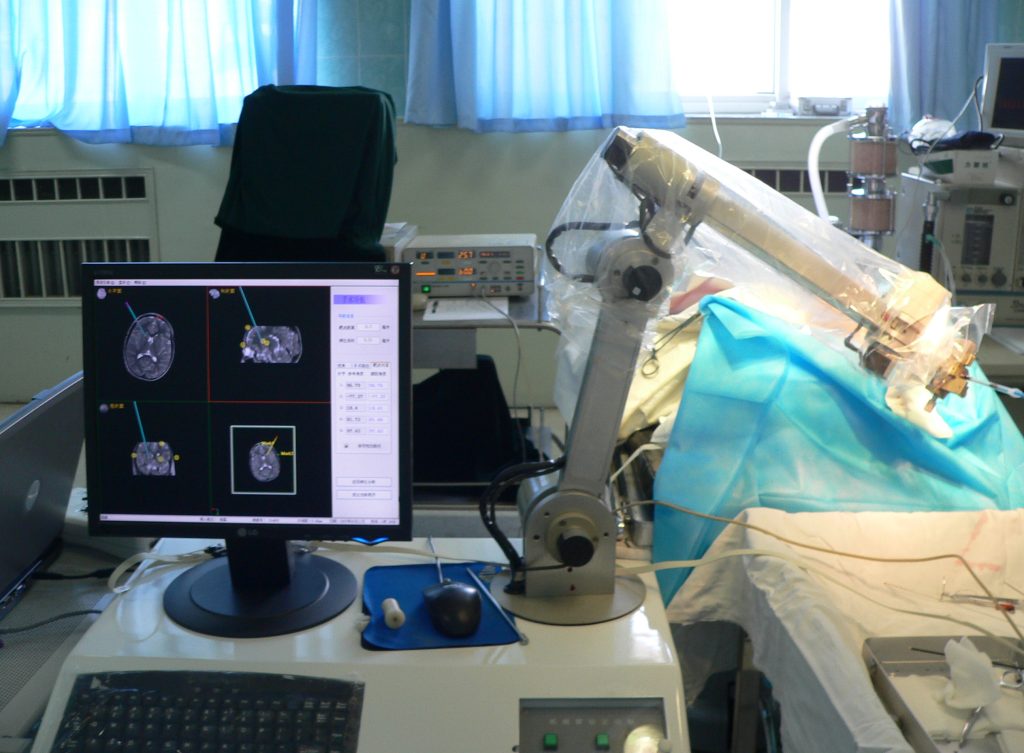
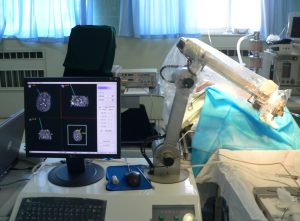
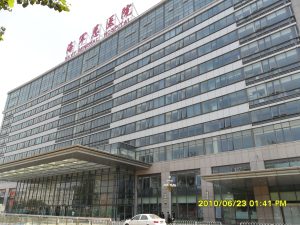
The Naval General Hospital’s Military General Hospital Neurosurgery Center, in collaboration with the Robotics Research Institute of Beihang University, was the first to apply robotic systems in clinical practice in 1997. Today, the fifth-generation robotic system can be connected to an operator terminal computer over the Internet, enabling remote robotic surgical procedures. This project holds a national patent and a Medical Device Market Approval Certificate; it enjoys independent intellectual property rights and has been commercialized. Robotic surgery was included in the Beijing Municipal Healthcare Insurance coverage system in 2005. This research has received funding twice from the National High-Tech Research and Development Program (863 Program) and twice from the Military Science and Technology Research Program.
Overview of Surgical System
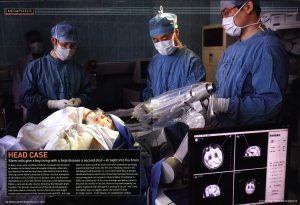
In stereotactic brain surgery, this system can replace traditional stereotactic frame and mark both the target location and the puncture trajectory, providing the surgeon with precise navigation and an operational platform. Once the target is positioned, the powered robotic arm can maintain a stable trajectory with a repeatability of 0.1 mm, ensuring surgical accuracy and precision.
Surgical indications
- Brain lesion biopsy: brain tumors, parasitic infections, or other unexplained lesions;
- Aspiration or resection of various intracranial cysts;
- Brain hematoma evacuation and drainage;
- Cerebral abscess drainage and antibiotic administration;
- Brain foreign body removal;
- Various functional neurosurgical disorders: Parkinson’s disease, dystonia, chorea, cerebral palsy, mental disorders, epilepsy, pain, etc.;
- Various intracranial treatment modalities, such as internal radiotherapy (administration of radioactive colloids or post-implantation catheters) and internal chemotherapy;
- Endoscopic treatment of various intracranial lesions.
clinical application
Our center has performed over 7,000 targeted surgical procedures for various neurosurgical conditions, including 3,700 robotic-assisted surgeries (of which 12 were performed via remote control). The complication rate is <0.5%. The average operative time is 20 minutes. Most patients can resume a liquid diet within 2–4 hours postoperatively; those with relatively mild preoperative conditions may get out of bed and ambulate on the day following surgery.