Treatment of Peripheral Neuropathy with Stem Cells
Results
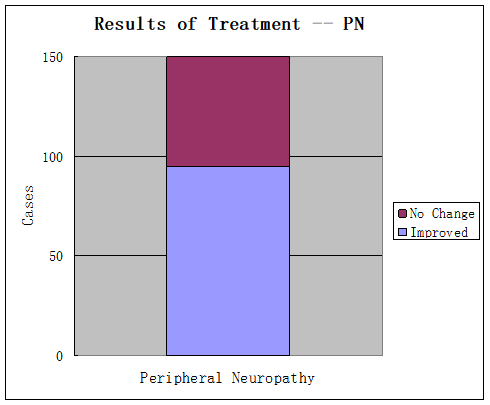
The mean age of the treated patients was 24.6 years. The oldest patient was 76 years old. Gender distribution rate was 1.4:1 (male:female). There were 63.3% of the cases reported improvements (Refer to figure below).
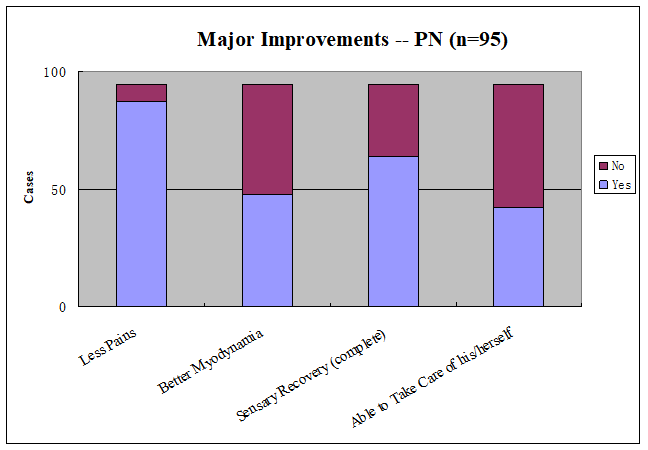
The type of improvements included less pain, better muscle strength, sensory recovery (complete), and the ability to take care of himself/herself (Refer to figure below).
Most improvements started within 5 months after the transplantation of fetal neuro stem cells in WSTC (Refer to figure below).
| First Improvements (n=95, N=150) | ||
| Months after Treatment | Cases | Cumulative Percentage |
| 1 | 5 | 5.26% |
| 2 | 19 | 25.26% |
| 3 | 32 | 58.95% |
| 4 | 22 | 82.11% |
| 5 | 12 | 94.74% |
| 6 | 3 | 97.89% |
| 7 | 1 | 98.95% |
| 8 | 0 | 98.95% |
| 9 | 1 | 100.00% |
Conclusion
In summary, neuro stem cells (NSCs) injected to treat peripheral neuropathy have shown to have a strong positive effect on the health status of 63.3% of the treated patients. Stem cell transplantation seems to be a safe and potentially powerful therapy for this group of patients in WSTC.