Q & A
More...Frequently asked questions about stem cell therapy and the consultation process.
Information for Patients and Family
What are stem cells?
A stem cell is basically a cell that is not yet specialized in the body. Stem cells have key features that separate them from other types of cells. They are:
- Unspecialized and renew themselves by dividing
- Able, under specific conditions, to become cells with specialized functions (e.g. nerve cells)
When a stem cell divides, the new cell can become a different cell with a more specific function, such as a heart cell, or it can remain a stem cell.
What is World Stem Cell Therapy Center?
World Stem Cell Therapy Center is committed to R&D, production, sales, and clinical application of stem cells. Our Center is dedicated to enhancing health condition and improving human life quality.
What are our technological strengths?
Our main tasks are to distribute stem cell technologies and products; and to do basic research and therapeutic application of stem cells including the purification, cultivation, expansion, induction, differentiation and identification of adult or embryonic stem cells.
The Center has an outstanding world-class research facility platform for stem cells. Currently, we are cooperating with scientific research institutes from America, Singapore and Taiwan. We are also developing independent research and development ability so as to become a first-class international stem cell research institute.
Under the slogan “Saving the patients’ lives & providing the best healthcare service”, the Center is striving effectively to implement the national high-tech development strategy to accelerate the transformation and industrialization of stem cell research findings. We do this through independent research or distributing stem cell technologies and products from our business associates.
What is our clinical strength?
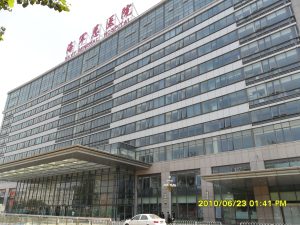
The Center was established in 1992. There is treatment for functional neurosurgery disease, skull base tumors, spinal cord injury, brain injury and cerebrovascular disease. It has the Gamma-knife Treatment Center, Microelectrode Treatment Center, Epilepsy Treatment Center and other specialty care units.
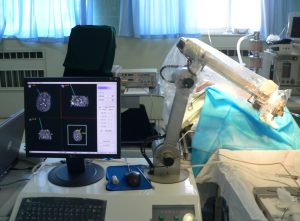
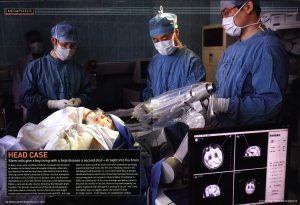
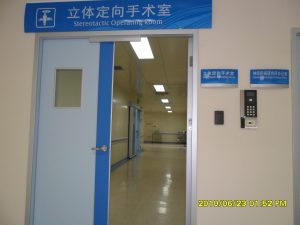
The total staff of our Neurosurgery Center is 54. The Neurosurgery Center is equipped with three-dimensional orientation, Robotic Operating Room, ECG Room and Neural Cell Culture Lab with total area of 2,100 square meters. The Center has 132 medical equipments, such as micro-electrode system, epilepsy knife systems, robotics systems, endoscopy systems, dynamic brain electroretinography machine, operating microscope and ultrasonic aspirator.
The leader of the Center is Dr. Tian Zengmin. Dr. Tian is Chief Physician and Professor. He is an Executive Director of The International Society of Stereotactic Neurosurgery; Vice Chairman of Branch of Functional Neurosurgery Group, Chinese Medical Association of Neurosurgical; Vice Chairman of Beijing Neurosurgical Institute; Chief Editor of “International Journal of Cerebrovascular Disease”; and Editor of the book “Modern Stereotactic Neurosurgery”.
What is the trend of stem cell clinical application in the world?
Stem cell research and treatment is currently being practiced at a high clinical level in the People’s Republic of China. The Ministry of Health of the People’s Republic of China has permitted the use of stem cell therapy for conditions beyond those approved in Western countries. Stem cell therapies provided in China have utilized umbilical cord stem cells. The stem cells are then expanded in centralized blood banks before being used in stem cell treatments.
Which diseases can be treated with stem cells?
About 65 diseases/conditions can be treated by stem cells. Categories successfully treated by adult stem cells include:
- Cancers
- Auto-Immune Diseases
- Cardiovascular
- Ocular
- Immunodeficiency
- Neural Degenerative Diseases/Injuries
- Anemia/Blood Conditions
- Wounds/Injuries
- Other Metabolic Disorders
How many cases are treated with stem cells in our Center?
Approximately more than 10,000 cases have been treated with stem cell therapy in our Center.
Why should I come to China to receive stem cell therapy?
The laws and policies regarding stem cell research & treatment in the People’s Republic of China are relatively flexible compared with those of other nations, due to different traditional and cultural backgrounds.
China has one of the most unrestrictive embryonic stem cell research policies in the world. In recent years, many Chinese scientists have been returning from Western countries to China to establish stem cell research centers and laboratories. As a result, the Chinese Ministry of Science and Technology and the Chinese Ministry of Health have issued official ethical guidelines for human embryonic stem cell research and clinical application in China. Therefore, therapies with stem cells have developed much faster in China than in many other countries.
Why is stem cell therapy currently not carried out in Europe and the United States?
There are basic research institutes which are doing research on stem cells, but due to the laws, regulations and restricted policies of their governments, they cannot perform stem cell therapies as in China.
What are the sources of stem cells?
Mostly the stem cells used in treatment include:
- Adult stem cells: derived from bone marrow, peripheral blood and some tissues;
- Embryonic stem cells: derived from the inner cell mass of the blastocyst. They tend to differentiate into different cell types.
What is stem cell therapy?
Stem cell treatments are a type of regenerative medicine that introduces new cells into damaged tissue in order to treat a disease or injury. Over 70 different disorders have been identified as amenable to stem cell therapy. The process of treatment is to inject the prepared stem cells into a person to repair specific tissues or to support organ function.
What examinations are needed before the therapy?
A few primary blood exams along with some radiological exams according to the disease are needed. These will help the therapist understand the stage of the disease.
How long does the patient need to stay at the clinic?
The therapy will be performed in the clinic, and it usually takes about 1–2 hours.
How many treatments are needed/given?
Generally 3–4 treatments are given. If more are needed, the doctors will address this during the first appointment.
Can other treatments be taken at the same time?
Medical decisions about what should be included from the patient’s regimen during the treatment will be decided based on the individual patient’s health condition.
Are there any known side effects of the therapy?
There is no report of major side effects with stem cell therapy, other than temporary pain at the stem cell injection site on the body.
Is there any special diet required?
No.
Does drinking or smoking affect the therapy?
Alcohol consumption and cigarette smoking can cause harm or injury to the new progenitor stem cells. Hence it is advisable for patients not to smoke or drink during the treatment.
What is the estimated cost for the treatment?
This Center will provide the therapy at a very reasonable cost. All international Quality Control protocols and rules for stem cell treatment will be followed during the therapy.
International Patient's Guide
1. Knowledge is Power — What should I research before traveling overseas for medical care?
Traveling overseas for surgery or any other medical treatment is an important decision. Taking the right steps and following a systematic approach can make this choice a truly rewarding experience.
It is important to do some research before you decide to go overseas for medical care. Update yourself and read all you can on the internet and other media, and if possible talk to people who have been abroad for surgery.
Consult your physician and get his or her opinion. Request your physician to prepare a detailed medical summary of your present medical condition, as this will be required by the Therapy Center in China as a basic input for providing you an informed opinion on the course and cost of treatment. Your physician would also brief you about the procedure that may benefit you, and can advise you on planning follow-up care in the home country after your return from China.
Shortlist a few facilities, preferably accredited hospitals, which appeal to you in the first instance.
2. Getting in Touch with the Therapy Center — How do I contact the hospital?
Most good hospitals in China have a user-friendly International Patient Services section on their website, with useful information about services to overseas patients as well as contact details of their executives.
Send an email to the selected hospital stating your present medical condition and the procedure that you are planning to undergo. Some hospital websites have a simple query form that you can fill in and send by clicking Submit. Make sure that you have filled in your phone number and email address correctly. You should get an auto-response email confirming receipt of your query almost by return mail. If you do not get this automated response, please log in your query again on the hospital’s website.
Usually the hospital should get back to you within 24 to 48 hours with an initial response. They may ask you to send more detailed medical information like scanned copies of your medical reports, X-rays and MRI scans to enable a specialist/surgeon’s opinion and a cost estimate.
Sometimes heavy scanned copies of medical reports may not go as email attachments. In that case you can use a free large-file transfer service to send the reports to the hospital.
3. Confirm Your Treatment — How do I finalize my medical treatment plan?
The hospital should send you a package cost with details of the inclusions and costs not included in the package. The number of days of stay at the hospital included in the package are also indicated.
The hospital may also send you a profile of the surgeon or doctor who would be treating you, or you can ask for the same.
Ask as many questions as you like at this stage to get complete clarity. How many days will you need to stay in China after discharge before you are able to fly back home? Most hospitals have hotel accommodations nearby with preferred rates for their international patients. Find out these details and provide for post-hospital stay expenses in your budget.
If all your questions are answered and the opinion/estimate suits you, ask them when is the best time to arrive in China at the hospital for treatment.
4. Planning Your Trip to China — What do I need for travel and visa?
Most major Chinese cities are now linked to international aviation hubs in Europe, the Middle East and Far East and have daily connecting flights.
You need a valid passport and Chinese visa to enter China. If you do not have a passport, please apply for one immediately. If you already have a passport, please check that it has more than 6 months of validity left, or else get it revalidated before applying for a Chinese visa.
You can find the local China consulate or embassy from the China Government website. The embassy or consulate website in your home country has all the information about applying for a China visa.
Please ask the hospital to email you a formal invitation letter for coming to China for medical treatment and attach a copy of this letter with your visa application.
For planning air travel you can check costs and connections on airline or travel websites, or contact travel agents who specialize in travel to China. It is better to book aisle or bulkhead seats with better leg room and instruct your agent or airline in advance if you need a wheelchair or help during transit.
If you wish to stay longer for a holiday in China after hospital stay, please carry your mobile phone handset. You can buy a China SIM card and save money on local calling as well as remain accessible to hospital or hotel staff.
5. Get Set and Go — What should I do before departure?
Please inform the hospital about your travel plans and flight numbers as soon as confirmed so that they can book your surgery, room and airport pick-up in time. Please ensure the hospital receives this information at least one week in advance of your arrival and that they confirm the airport pick-up and hospital booking to you.
It is advisable to transfer the cost of medical treatment by bank transfer to the hospital before starting the journey. This will save you the risk of carrying large amounts of cash or delay in treatment if your credit/debit card is not accepted. Ask the hospital to send Bank Wire Transfer Instructions and get confirmation that they have received your funds.
Please carry all your medical records and any medicine that you may be taking. You may need warm clothing as the climate in China can be cold. While you stay in hospital you will be provided comfortable hospital clothing, so carry a few sets of loose-fitting comfortable clothing and a pair of walking shoes for after surgery.
Make photocopies of your passport, visa and other documentation and keep them separate from your hand luggage; leave details of where you are going with someone at home. Take good care of personal belongings, passport, cash and air tickets until you reach the hospital.
On the aircraft, drink water and non-alcoholic beverages and walk the aisle about once every hour when awake. Before landing, fill in the immigration form and keep the stamped passport and form safely. Pick up your checked baggage and go to the arrival area where someone from the hospital will meet you with a board in your name.
6. At the Therapy Center — What happens during my hospital stay?
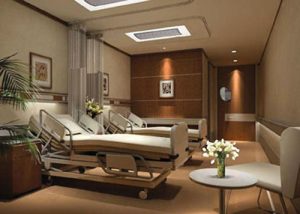
On arrival at the hospital, you will be checked into the room reserved for you. Admission formalities will be completed and some queries will be posed by admission personnel and the duty doctor. Valuables can be deposited for safekeeping with a receipt.
While you are in hospital, doctors will explain the proposed treatment to help you decide whether you agree to it. The hospital must obtain your written consent to any operation and other procedures. If you are unsure about any aspect of the treatment proposed, please ask to speak to a senior member of staff.
Diet is an integral part of your medication. The hospital’s dieticians, in association with your doctor, will assess your diet needs. Please let them know your diet preference. The same applies to your companion if they wish to be served food in the room. Hospitals also have a cafeteria.
Prior to surgery or procedure, let the hospital administration know if you would like regular updates sent to your family back home. Your companion will also be kept updated.
Your surgeon or doctor will let you know when you can be discharged. At discharge, collect a detailed discharge report and copies of all investigations, and ask staff to explain anything you wish to understand. The airline may require a fit-to-fly certificate; if you have a metal implant or artificial joint, collect a certificate that will exempt you from metal detectors. Return tickets may require reconfirmation; guest relations staff can help at actual cost.
Please do not leave the hospital without your doctor’s permission, and follow advice on rehab, physiotherapy and diet in a disciplined manner.
7. After You Return Back Home — What should I do after returning?
Please keep your medical record safely and show it to your local physician so that he or she can monitor your progress and advise you from time to time.
If you need any help or advice from your treating surgeon or doctor in China, please keep his or her email address and phone number handy and send periodic updates.
Do share your experience with others in your home country. Keep smiling!
For any more information that you may require, please contact us.