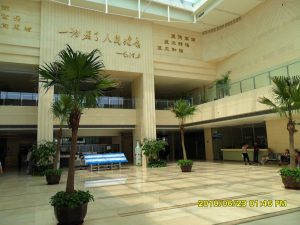
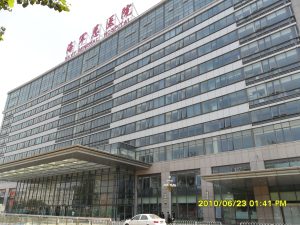
Vice President of the Chinese Navy General Hospital, Director of Neurosurgery Center, PLA, doctoral degree student advisor in China Second Military Medical University, Director of Naval Institute of Neurology.
As a famous expert in neurosurgery, Dr. Tian currently is the Executive Director of the International Society of Stereotactic Neurosurgery; Deputy Director of the Functional Neurosurgery Group, Neurosurgical Branch of Chinese Medical Association; Deputy Director of the Beijing Neurosurgical Institute; Director of the Chinese Medicine Committee, Beijing Medical Awards Foundation; Deputy Editor of Journal of China Minimal Invasion Surgery; Editor of Journal of International Medicine Cerebrovascular Diseases; Editor of the book Modern Stereotactic Neurosurgery and edited 20 other books.
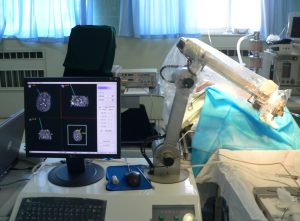
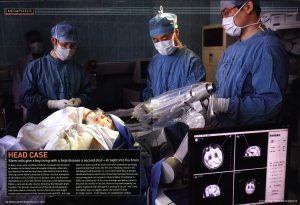
Dr. Tian has published, as the first author, more than 120 articles in academic journals. In May of 1997, Dr. Tian applied the robot into surgery; it was listed as one of the Top Ten News of the Chinese medicine field that year. In 2003, Dr. Tian successfully performed teleoperation between Beijing and Shenyang — the first case in the world — and has successfully carried out more than 1,800 robotic operations to date.
Expertise
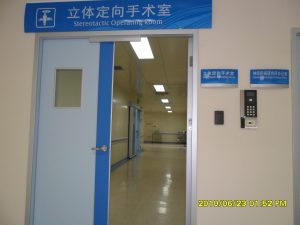
- Modern Stereotactic surgery: Research for 20 years; the first person to utilize this technique in China. Cerebral hemorrhage, epilepsy, brain abscess, and foreign body in the brain can be treated without craniotomy.
- Brain tumor radiotherapy: Successfully completed 1,900 cases of isotope radiotherapy for multiple sites and types of brain tumors, especially gliomas and craniopharyngiomas.
- Robotic Surgery: Developed the robotic surgery system for brain surgery — the only system of its kind in the world. Since 1997, completed 1,200 cases of minimal invasive surgery with robot.
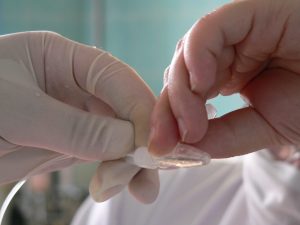
- Neural Stem Cell Transplantation: Since 2000, carried out 360 cases of neural stem cell transplantation to treat Parkinson’s disease, cerebellar atrophy, and mental illness with good results.